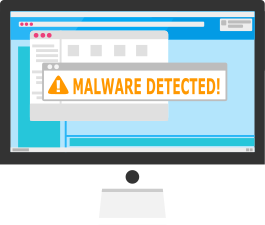
Cybercrime is a general term to describe any type of criminal activity that takes place on the Internet or targets information systems. The most common threats are:
The most common type of attack that can be carried out in many different ways. It involves impersonating another person or entity in order to obtain information such as logins and passwords or personal data. This information used in an unauthorized way is intended to lead to harm to the victim of the attack – e.g. theft of money from a bank account, blackmail for ransom or sale of personal data.
We are exposed to phishing attacks during everyday work with a device connected to the network, in particular when logging in to: bank accounts, websites, social media accounts and other online services.
Malware, or malicious software, is a broad term that describes a nuisance or harmful type of software designed to gain access to the system of an infected device without the user’s knowledge. What the criminal wants to achieve with the malware will depend on its type.
Malicious software includes all kinds of computer viruses and worms, Trojan horses, exploits, rootkits, keyloggers, encryption software (ransomware) or spyware.
Ransomware is a type of malicious software from the field of cryptovirology, which is designed to block access to a computer system or prevent reading of data stored in it, most often using encryption techniques, so that the criminal can later demand a ransom from the victim for restoring the original state.
Victims of ransomware are most often small and medium-sized enterprises that do not protect their data in a sufficient way. Criminals target those organizations for whom the encrypted data may be valuable enough to pay the ransom.
Spyware is a type of malicious software that monitor user’s activity while using a computer or mobile device without the its consent. In this way, confidential user data is collected, such as information about visited pages or access data. Spyware can also perform actions without the user’s knowledge, e.g. change settings, replace websites, or download and run files downloaded from the network.
Spyware usually works in the background as an additional and hidden component of a larger program, which makes it extremely difficult to identify and combat.